
There are not enough lacrosse officials in America, the path in is shorter than almost anyone realizes, and it pays on the day you work. Here is the whole route, from the interest form to the hardest call on the field.
You do not need to have played. The Central Texas women’s officials organization puts it in one line on its own front page: “No lacrosse background required! We provide training.” CTWLOO. What follows is the certification path, the real money, the gear with prices, the mechanics, and the calls that separate a second-year official from a tenth-year one.
1. Why officiate
Start with the money, because it is better than most people assume and it is published. These are the actual 2026 game fees from the Texas Lacrosse Officials Association:
| Game | Crew | Per official |
|---|---|---|
| THSLL varsity | 3 officials | $105 |
| THSLL junior varsity | 2 officials | $90 |
| Youth 14U and 12U | 2 officials | $90 |
| Youth 10U and 8U | 1 official | $90 |
| Tournament games | varies | $70 |
| Travel, high school games | 15–34 miles $10 · 35–69 miles $15 · 70+ miles at the IRS mileage rate | |
Source: TXLOA policies and fees. On the girls side, CTWLOO lists $55 to $100 per game depending on certification level.
Two varsity games on a Saturday is $210 plus travel, for about four hours including warmups. A high school official working a full spring season of two or three games a week is looking at real money for time that was already going to be spent at a lacrosse field.
The rest of the case is why people stay. You choose your own availability — assigners work from the dates you give them. You stay inside the sport after your playing days end. And in a state where lacrosse is still growing, the officials are a large part of why there is a schedule at all.
2. How to become an official
USA Lacrosse breaks the entry into three steps, and the whole thing can start this week.
- Fill out the interest form at usalacrosse.com/become-official.
- Join USA Lacrosse as an official — $60 a year. It carries official-specific insurance, game fee reimbursement coverage for lacrosse-related injuries, and the certification requirements themselves at no extra charge. USA Lacrosse membership.
- Contact your local officials organization — where the training, the field evaluation and the game assignments come from. The officiating contacts directory lists them by area.
The local association then runs its own sequence: the rules course, the annual online rules exam, a professional development course, an on-field evaluation by a certified trainer, and background screening. Certification renews every year, not once.
You can start at fourteen. USA Lacrosse’s Junior Official certification is open to ages 14–18 — membership, the rules course, an annual professional development course, an annual online rules exam passed at 90% or better, and a field evaluation by a local trainer. Junior officials work players at least two age levels below their own age. USA Lacrosse certification FAQ.
3. The Texas path
Two independent leagues run Texas high school lacrosse, each served by regional officials associations rather than one statewide body.
- Central Texas Lacrosse Officials Association — boys, covering the Austin and San Antonio corridor. Every member must also hold a USA Lacrosse membership in good standing. New officials contact the assigner directly.
- Central Texas Women’s Lacrosse Officials Organization — girls, covering the same region including San Antonio. Training provided, no playing background required.
- Texas Lacrosse Officials Association — boys, the Houston-area association whose published fee schedule appears above. Annual dues are $75 if paid by December 31 and $100 after, and new officials complete a two-part video training module before working games. TXLOA training and dues.
The rulebook you have to learn depends on which league you work. THSLL boys games run on NCAA rules with waivers approved at the league’s annual meeting, so you carry the NCAA book and the THSLL book. TGHSLL girls games run on NFHS girls rules. Two teams at the same Texas school are governed by two different books — laid out in our rules guide, boys lacrosse in Texas and girls lacrosse in Texas.
4. The women’s game is officiated separately
The most common point of confusion, so it is worth stating plainly. Boys and girls lacrosse are different sports with different rulebooks, different fouls, different mechanics and separate certification tracks. A men’s-game official is not qualified to work a girls game, and the reverse is equally true. Some people certify in both, but nobody does it by accident.
The women’s game runs its own rating ladder, earned entirely through on-field evaluation:
| Rating | Roughly |
|---|---|
| Apprentice / Level 1 in training | Entry rating, first year |
| Level 1 | Youth and lower-level high school |
| Level 2 | Varsity high school |
| Level 3 | Top-level high school; earned at a Level 3 clinic or by holding a collegiate rating |
| Collegiate / Collegiate Select / National Elite | The college ladder, rated separately |
Source: Colorado Women’s Lacrosse Officials Association ratings information, which documents the national USL and collegiate rating structure.
Two certified officials are required in the girls game and three are recommended. USA Lacrosse Women’s Officials Manual.
5. What an official carries
A first-year kit is roughly $200 to $300 and most of it lasts for years.
| Item | Detail | Price |
|---|---|---|
| Striped shirt | 2.25″ black and white stripes for the men’s game; 1″ stripes for the women’s game | $26.99–$54.99 |
| Black shorts | Solid black, no stripes | $39.99 |
| Black pants | Cold weather | $56.99 |
| Striped jacket | Waterproof pullover. Required for experienced officials in some associations | $89.99 |
| Black cap | Men’s game — black with white piping | $19.99–$27.99 |
| Whistle | Fox 40 finger whistle is the standard. Carry a spare | $11.99 |
| Penalty flags × 2 | Yellow, ball type. Long-throw versions exist | $8.99–$15.99 |
| Cards | Women’s game — green, yellow and red | From officiating suppliers |
| Head gauge | NCAA and NFHS stick-head measuring card, doubles as an information card | $8.99 |
| Tape measure | 6-foot black. For stick length and pocket depth checks | Hardware store |
| Scorecard | Rewritable plastic, for penalties and score | $6.99 |
| 20-second timer | Required for most age groups to time penalties and restarts | $39.99–$84.99 |
| Patches | USA Lacrosse arm patch and American flag patch | about $5 each |
Sources: Honig’s · TXLOA uniform and equipment list · NCWLO women’s gear list. Confirm the exact uniform with your association before you buy — shirt stripe width and cap requirements vary by league.
6. The rulebooks
Most of them are free PDFs.
| Book | Governs | Cost |
|---|---|---|
| NCAA Men’s Rules | College men — and Texas high school boys, via THSLL waivers | Free |
| NCAA Women’s Rules | College women | Free |
| NFHS Boys · NFHS Girls | High school in most states; girls high school in Texas | About $12 |
| USA Lacrosse Boys Youth | 6U through 14U boys | Free |
| USA Lacrosse Girls Youth | Youth girls | Free |
| THSLL Rulebook | Texas boys high school — the waivers on top of NCAA rules | Free |
| NFHS vs. NCAA comparison chart | The differences, side by side | Free |
Read the one that governs your assignment, then read the comparison chart. Working a Texas boys varsity game with NFHS rules in your head is the most common rookie error in this state.
7. Mechanics and signals
Two-person is where you will start. One official leads the ball into the offensive end and takes the goal area, the other trails and covers the bench side, and the two swap on every change of possession. It is why you learn to see the whole field early.
Three-person is the varsity standard in the men’s game, and the positions have names: lead works at or near goal line extended and owns the goal, net and ball; trail sits just inside the wing area above the attack box, watches the bench side and late hits, and relays penalties to the table; single-side covers the far side and the action in front of the crease. The manual’s own instruction is the thing to memorize: keep “a wide triangle, which allows the crew to keep the play in their lines of vision,” and “never let the ball get behind you.” USA Lacrosse Three-Person Mechanics Manual.
The signals you will make every game
| Signal | What it is, in USA Lacrosse’s own words |
|---|---|
| Slashing (boys) | “A poke into the ribs, chest, neck or back. A vicious, uncontrolled swinging of the stick, whether contact is made or not” |
| Cross-checking (boys) | Using “the stick shaft between his hands to play an opponent” |
| Holding (boys) | “Holding an opponent with a free hand and holding the body of an opponent with a stick” |
| Warding off (boys) | Using “his free hand or arm or any other part of his body to hold, push or control the direction of the movement of the crosse” |
| Offside (boys) | “Too many players in either end of the field” |
| Play on | The whistle is delayed because “the offended player may be disadvantaged by the immediate suspension of play” |
| Obstruction of free space to goal (girls) | “Obstructing free space outside the goal circle” — the call parents know as shooting space |
| Crosse into the sphere (girls) | Holding a stick “within the sphere around the face or throat of an opponent” |
| Three seconds (girls) | A defender inside the 8-meter arc “more than 3 seconds unless one is marking an opponent” |
| Dangerous propelling (girls) | “Propelling the ball in a dangerous or uncontrolled manner” — a mandatory card |
Sources: USA Lacrosse boys officials signals · girls officials signals. Both PDFs carry the drawing for every signal.
8. The hardest calls
Slashing versus a legal check
The rulebook language is the whole answer, and most new officials never read it closely. A slash is “a vicious, uncontrolled swinging of the stick, whether contact is made or not.” Contact is not the test — control is. A hard, controlled check on the gloved hand or the stick is legal wherever checking is legal; the same swing thrown wildly is a slash even if it hits nothing.
The crease
A bright line: a goal is disallowed “when the ball passes through the plane of the goal and any part of the body of a player of the attacking team is in the goal-crease area.” Body, not stick. Watch the feet, not the ball. NCAA Men’s Rules.
Offside
Countable, and therefore an inexcusable miss. A team is offside with more than six players in its offensive half or more than seven in its defensive half. On every substitution and fast break, count the far end before you follow the ball.
The shot clock and stalling
Eighty seconds on a new possession, and the ball must cross the midline before the clock reaches 60. That clear requirement is what replaced the judgment call most people still call stalling — the clock does the work, and your job is to know when it resets and when it does not.
Shooting space and dangerous propelling
Shooting space is measured, not guessed: the NCAA women’s book sets the measure as the combined length of the defender’s stick and arm. Inside that distance you are marking; outside it, standing in the lane between the ball and the goal is a foul.
Dangerous propelling is defined by intent to look, not by outcome: “passing or shooting through someone or passing or shooting without looking first; it is the responsibility of the person with the ball to make a safe pass or shot.” USA Lacrosse Girls Youth Rulebook 2026. The sphere it protects is “the 12-inch area surrounding the head in all directions.”
9. Game management
The best officials prevent situations rather than punish them, and they do it with words. Matt Palumb, who has been on a field for more than thirty years, puts the principle bluntly: “You don’t want to be an ‘I got you’ guy.” USA Lacrosse Magazine.
- Talk early and talk small. “Watch the hands, twenty-two” in the first quarter is worth three flags in the fourth.
- Answer a coach’s question once, clearly, and then move on. A coach is entitled to know what you called. He is not entitled to relitigate it every possession, and saying that calmly the first time sets the tone for the game.
- Never officiate the parents. Sideline behavior is the head coach’s responsibility and the host school’s; your escalation path runs through the coach, not the crowd.
- Card mechanics: be slow, be visible, be quiet. Get the number, tell the coach the number and the foul, tell the table, then start the clock. A card delivered without a raised voice ends an argument. A card delivered in one is the argument.
- Whistle when the safety of the play requires it. Talk in every other gap.
10. The 10U game is a different job
At the youngest levels the rulebook itself expects teaching. USA Lacrosse does not require officials at 6U and 8U at all, and at those levels “coaches can be on the field to assist and officiate.” At 10U small-sided, one certified official is enough — and if an official is used, the coaches come off. For 10v10 play at 10U through 14U, USA Lacrosse recommends at least two certified officials. USA Lacrosse Boys Youth Rulebook 2026.
A 10U game and a varsity game ask for opposite things. At varsity you are managing a contest. At 10U you are running the first lacrosse game some of those kids have ever played — so you tell a player what he did before you hand the ball over, you explain a call to a bench that has never seen it, and you let a coach teach through a stoppage. An official who does that well is the reason a 10U family comes back next season.
11. Matt Palumb
If you have watched professional lacrosse in the last several years you have heard him. Matt Palumb is the head referee of the Premier Lacrosse League, and before that he was one of the best goalies of his era.
He was a four-year starter in goal at Syracuse from 1987 to 1990, won three NCAA championships and went 40–2 as a starter. He was named Most Outstanding Player of the 1988 NCAA tournament and earned USILA second-team All-America honors in 1990. He entered the Greater Syracuse Sports Hall of Fame in 2016 and returned to Syracuse in 2006 on the athletics staff, where he works in donor relations. Syracuse Athletics.
He started officiating in 1992 and never stopped. He has worked four NCAA men’s lacrosse championship games, multiple Final Fours, the World Lacrosse Championships, and he officiates NCAA basketball as well — in 2010 he worked the Division III men’s basketball Final Four and the Division I men’s lacrosse championship in the same year. He has been the PLL’s head official since the league’s first season in 2019.
What he says about the job is the most useful thing on this page. On prevention over punishment: “the best officials prevent situations from escalating with their words.” On the standard he applies to a decision: “How would I like to be treated if I was a player here?” On the mistakes: “I’m going to miss a call in every game.” And on why he explains calls into a microphone at all: “If we want to be mainstream, we’ve got to be able to be understood by mainstream people.” Front Office Sports · USA Lacrosse Magazine.
12. The shortage, and what it actually means
The numbers are national and they are not small. The NFHS reported roughly 50,000 high school officials across all sports leaving after the 2018–19 season, with the national count falling from about 240,000 to about 200,000. The reasons were consistent: pandemic-timed retirements, and treatment from adults on the sideline.
The recovery is real and it is also worth knowing: the NFHS counted 237,811 registered officials in 2024–25, a 6% rise year over year and 8% above the 2018–19 baseline. NFHS.
Lacrosse-specific research points at retention rather than recruitment. A study of 55 Midwest lacrosse officials found an average age of 45.8 years and 14.3 years of experience — an experienced group, and an aging one. Fifty-eight percent reported verbal abuse from coaches at least sometimes and 49% reported the same from fans and parents, and only 42% said they often felt supported by their own association. The Sport Journal.
What it means on the ground is simple: games move. When a region is short on certified officials, Saturday tripleheaders get split across two sites, junior varsity games get shortened, and some get rescheduled entirely. Every official added to an association is one more game that stays on the calendar.
The path back in is short. Fill out the interest form, join, and call your local association. Everything else — the terminology in the glossary, the rulebook differences in the rules guide, the officiating links in the master resource list, and the other side of the sideline in the coaching guide — is already written down and mostly free.
Paul Taylor
Varsity Head Coach, Central Catholic High School
Founder, Great American Lacrosse
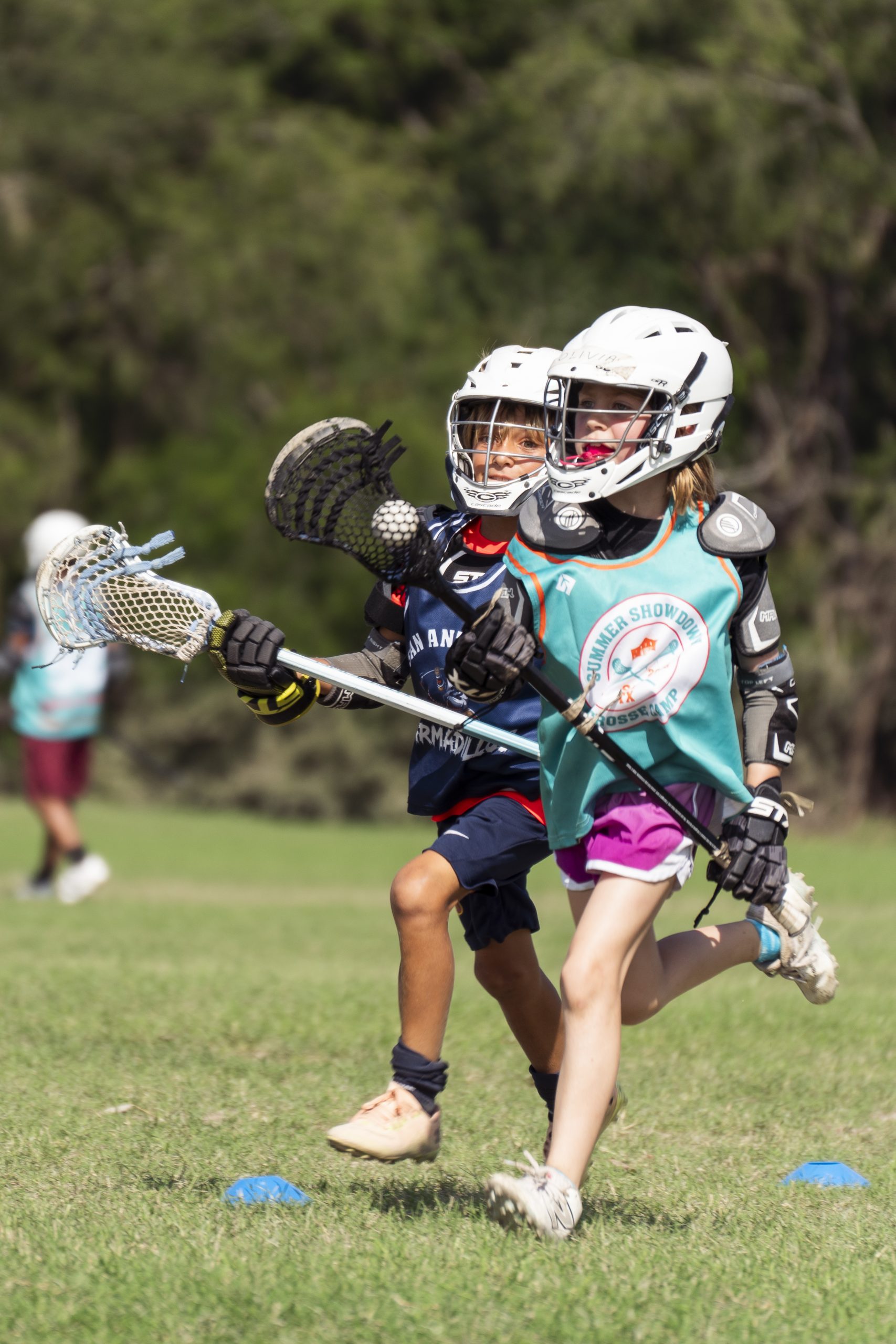
Paul Taylor is the varsity head lacrosse coach at Central Catholic High School in San Antonio and the founder of Great American Lacrosse, which runs the SA Armadillos club teams and the Summer Showdown Camp. He has coached lacrosse in San Antonio for over a decade.
Train with Great American Lacrosse
Great American Lacrosse runs year-round programs in San Antonio — the Speed & Skills Clinic, the SA Armadillos club teams, winter rec, private training, and the Summer Showdown Camp. Open enrollment, every level, beginners welcome.