

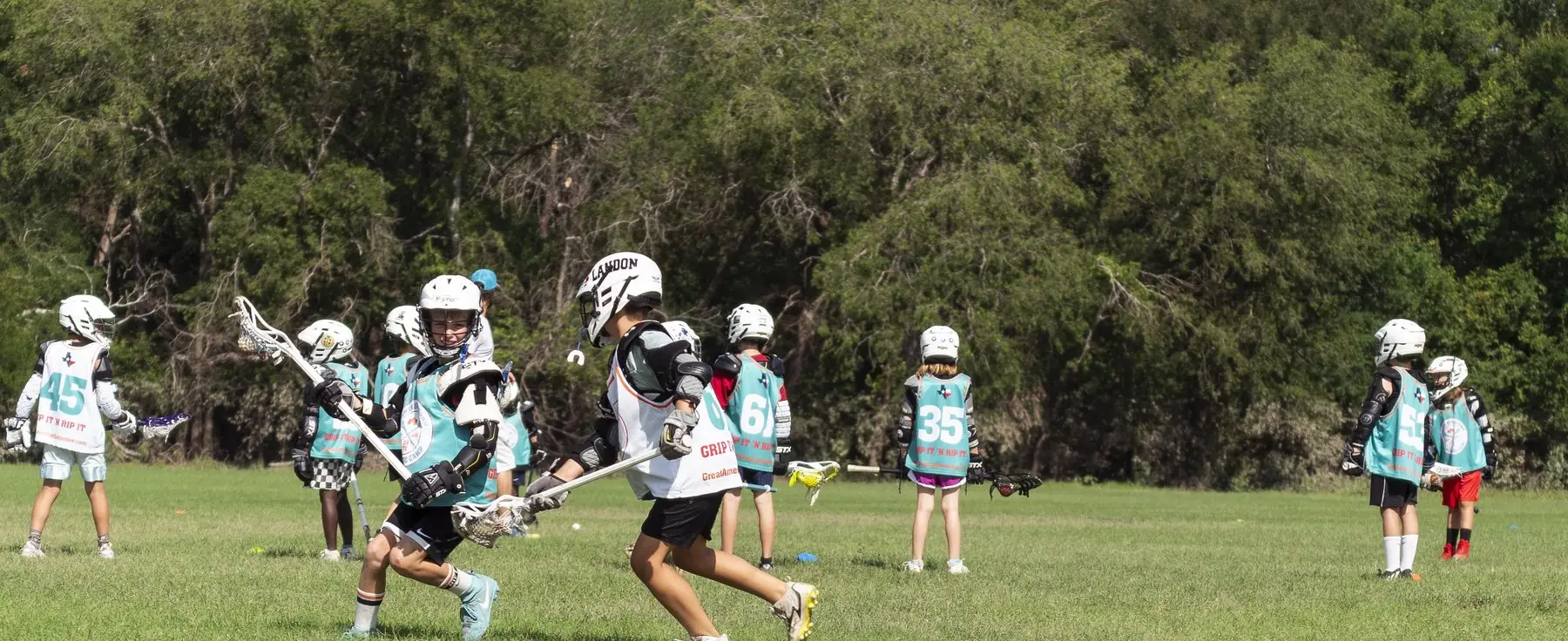
Somebody handed you a bag of balls and a roster. Here is the rest of it — the paperwork, the practice plan, the drills, the books, and the twenty minutes with parents that decides how your season goes.
Written for the person coaching a youth, middle school or high school team. Every requirement below is checkable, the practice plan runs tomorrow, and the drills are described in enough detail to teach from a phone on the sideline.
1. What you have to have before the first whistle
A USA Lacrosse coach membership is $60 a year and unlocks almost everything else on this list — coach-specific insurance, a free background screening through NCSI, and abuse awareness training at no extra cost. USA Lacrosse membership. Certification sits on top of it in four tiers, and Bronze, the baseline, is included.
| Level | What it requires | Cost |
|---|---|---|
| Bronze the baseline |
Membership · background check · abuse prevention, cardiac care, concussion and cultural competency courses · annual rules test | Included with membership |
| Silver | Valid Bronze · Proper Contact course · four Silver online courses | $35 |
| Gold | Valid Bronze and Silver · five Gold online courses | $35 |
| Platinum | Valid Bronze, Silver and Gold · five Platinum online courses | $35 |
Source: USA Lacrosse Coach Certification.
More training is free. The NFHS Learning Center gives away Concussion in Sports, Sudden Cardiac Arrest, Heat Illness Prevention and Sportsmanship. NFHS Learn. The CDC’s HEADS UP course issues a concussion certificate most leagues accept. Add a Red Cross or American Heart Association CPR and first aid card and you have cleared the bar.
Do this part in September, not January. Screening, training and a rules test are each quick, but they queue up. The coach who starts the paperwork the week practices begin is the coach who misses the opener.
2. What Texas asks for specifically
THSLL (boys) puts it in writing: “All THSLL coaches are required to be active members of U.S. Lacrosse.” The league strongly recommends every program run a background check on its coaches, and requires a game report with the official score filed within 48 hours of the final whistle. THSLL Rulebook 2026, §6.1.
TGHSLL (girls) requires a designated head coach holding a US Lacrosse membership valid the whole time she or he is in the role. Its appendix recommends the certification levels, current first aid and CPR cards, and background checks on coaches and anyone handling program money. TGHSLL Rules, §11 and Appendix B.
The rulebook you coach out of depends on which side of the program you are on. THSLL boys games are played under NCAA rules with league waivers — 15-minute quarters and an 80-second shot clock. TGHSLL girls games are played under NFHS girls rules. Two teams at the same school play two different codes. Full breakdown in the rules guide, boys lacrosse in Texas and girls lacrosse in Texas.
3. The 90-minute practice
Ninety minutes is the standard high school block and the outer edge of what a middle school group holds. One principle runs through it: every minute has a ball in it, and nothing is taught standing still that can be taught moving.
| Clock | Block | What it is doing |
|---|---|---|
| 0:00–0:08 | Dynamic warmup and partner stick work | 100+ catches in before anyone thinks about a play |
| 0:08–0:20 | Line drills — passing on the move, both hands | The whole team touching the ball at speed. Weak hand is not optional |
| 0:20–0:32 | Individual skill by position group | Attack dodges, middies clear, defense approaches, goalie outlets |
| 0:32–0:45 | Small-sided — 3v3, 4v3, 3v2 | Where players learn to play. More decisions per minute than any full-field drill |
| 0:45–0:50 | Water and one teaching point | One point. Not five. They will remember one |
| 0:50–1:05 | Team offense or team defense | Pick one per practice. Trying both means installing neither |
| 1:05–1:15 | Special teams — man-up, man-down, or clearing and riding | The phase most youth teams never rehearse and close games turn on |
| 1:15–1:25 | Full-field or half-field scrimmage | Live reps on a running clock. Coach from the sideline |
| 1:25–1:30 | Competitive finish and huddle | Conditioning with a winner — cage relays, ground ball king of the hill |
Conditioning lives inside the drills, not bolted on the end. Twelve minutes of full-speed 4v3 is more running than a set of gassers, with sticks in their hands.
4. The season, phase by phase
The Texas high school season runs in the spring, so the calendar starts in the fall. The teaching load front-loads hard — by March you refine, you do not install.
| Phase | What practice looks like | What you are building |
|---|---|---|
| Offseason summer, early fall |
Wall ball, box or 7v7, other sports | Stick skills and athleticism. Multi-sport athletes are the goal, not the compromise |
| Preseason 8–10 weeks out |
Conditioning, fundamentals, install offense and defense | Every system you run all year. What is not in by the opener never goes in |
| Early season | Heavy small-sided, situational work, rotate lineups | Finding out who your team actually is. Play everyone here |
| Mid season | Shorter, sharper practices. Scout looks. More film | Legs. Do not out-practice your own team in March |
| Late season | Special teams, end-of-game situations, set plays | The four or five plays a playoff game turns on |
| Playoffs | Two hard days, then taper. Walkthroughs over reps | Freshness. Nothing new goes in |
5. The drill library
Organized by what each teaches. Every one runs with cones, balls and the players you already have.
Ground balls
- 1v1 box. Two lines facing across a 10-yard box, coach rolls a ball between them, first two go. The whole skill in one rep — knees bent, two hands, scoop through the ball rather than at it, protect, outlet.
- Gauntlet. One player scoops while two teammates apply light stick pressure on the way out. The scoop finishes with the ball protected.
- Three-man ground ball. Three players, one ball, one winner. The other two learn to box out and hunt the second effort, where most loose balls are won.
Passing and catching
- Star drill. Five cones in a star, pass and follow your pass. Passing to a moving target, and calling a name before you throw.
- Partner ladder. Ten right, ten left, ten quick sticks, ten one-handed catches. Five minutes, and the most transferable thing you will run.
- Wall ball. The highest-return thing a player can do alone — our wall ball routine is a printable place to send them.
Dodging
- Cone progression. Split, roll, face and question-mark dodges against a cone, then a shadow defender with no stick, then live. Skipping the middle stage is why dodges break down in a game.
- 1v1 from X. Attacker behind the goal, defender topside, five seconds to a shot. The most common situation in the sport.
Clearing and riding
- 5v4 clear. Goalie saves, defense breaks out on a banana cut to the sideline, four riders pressure. The whole phase in one drill.
Man-up, man-down and transition
- 6v5 half field on a 30-second clock. Run a 3-3, a 2-3-1 and a circle set. The clock is what makes it real.
- 5v6 rotation. Defense in a rotating box, sliding on ball movement, hands up in lanes. Ten minutes a week wins two games a season.
- 4v3 fast break. The L shape — ball carrier at the top, three across. Teaches ball movement to the open man over the hero shot.
- 3v2 continuous. A score or turnover sends the ball back the other way, next group in. Conditioning disguised as decision-making.
Goalie
- Five-spot shooting. Shots from set positions around the arc, so the goalie learns angles instead of reacting to chaos.
- Outlet under pressure. Save, turn, hit an outlet with a rider closing. The save is only half the job.
You do not have to build a drill library from scratch. The USA Lacrosse Mobile Coach app carries over 500 men’s and women’s drills with diagrams and video, sortable by level and by skill taught, plus pre-built practice plans. It is free with a membership you already need.
Want to draw your own plays and drills? DiagramTheGame lets you draw and animate plays and drills, build playbooks and practice plans, and share them with your team. A free plan is available.
6. Practice-to-game ratio and playing time
USA Lacrosse publishes actual numbers for this, and they beat any coaching philosophy essay.
| Stage | Age | Practice : competition | Session | Frequency |
|---|---|---|---|---|
| Discovery | 4–6 | Competition embedded in the session | 30–45 min | 1x/week, 8–10 weeks |
| FUNdamentals | 6–8 | Competition embedded in the session | 45–60 min | 2x/week, 8–12 week season |
| Foundations | 7–10 | 70:30 | 60–75 min | up to 3x/week |
| Emerging | 12–14 | 70:30 | 60–75 min | up to 3x/week |
| Competitive | 15–18 | 60:40 | 90 min | up to 3x/week |
| Compete to Win | 18+ | 40:60 moving to 30:70 | up to 120 min | up to 4x/week |
Source: USA Lacrosse Athlete Development Model, stages 1–6.
Every stage in that document also asks athletes to keep another sport or activity going four to five times a week, with a real rest period in the year. A twelve-year-old playing three sports is doing exactly what the national development model asks for.
Playing time follows the same curve, and saying it out loud in February prevents a hundred text messages in April:
- 10U and 12U — close to equal minutes, multiple positions. The kid who is small at eleven is often the best player at fifteen.
- 14U and middle school — broadly equal, with earned reps in close games. Say the standard out loud: attendance, effort, knowing the calls.
- JV — development first, everyone plays every game. A JV player who does not play does not come back for varsity.
- Varsity — earned, and the criteria are published. Not equal, but never mysterious.
7. The bookshelf
Half are about lacrosse. The other half are about coaching, and that is the half that changes how a season feels.
| Book | Author | What it is for |
|---|---|---|
| Lacrosse: Technique and Tradition 2nd edition of the Bob Scott classic |
David G. Pietramala and Neil A. Grauer | The men’s game’s reference text — skills, positions, systems, history |
| Lacrosse Fundamentals | Jim Hinkson | Skills and teaching progressions. Hand it to a first-year assistant |
| Coaching Girls’ Lacrosse: A Baffled Parent’s Guide | Janine Tucker and MaryAlice Yakutchik | For the parent who just volunteered to coach the girls team |
| InSideOut Coaching | Joe Ehrmann | Why you coach, before what you coach |
| Legacy | James Kerr | Fifteen lessons from the All Blacks on standards |
| The Culture Code | Daniel Coyle | The mechanics behind the phrase “good locker room” |
| Play Practice (2nd ed.) | Alan Launder and Wendy Piltz | Games-based teaching — the theory under every drill above |
| Motor Learning and Performance (7th ed.) | Richard A. Schmidt and Timothy D. Lee | How a body learns a skill. Blocked vs. random practice, feedback timing |
If you read exactly two: InSideOut Coaching for why, and Play Practice for how. The first changes your preseason meeting. The second changes every Tuesday for the rest of your career.
8. Film
Filming is now cheap enough that not filming is a choice. Three systems cover most of the market:
- Hudl — the platform most high school athletic departments already run. Upload, tag, cut highlight reels, share to recruiting profiles. Its Focus cameras mount permanently and film with no operator.
- Veo — a tripod camera that records the full field in panorama and builds a follow-cam view afterward. Good for a club with nobody free to run a camera.
- Trace — an automated camera plus player-worn trackers that cuts each athlete’s own clips out of the game.
- Free film. The NFHS Network Texas lacrosse page archives high school games school by school; college and pro teaching film is in the master resource list.
Running a film session with teenagers
- Twenty minutes, ten to fifteen clips, one theme. Nobody has learned anything in minute forty of a film session.
- Open with two clips of something done right, by name. They listen to the correction after that.
- Ask before you tell. “What do you see here?” builds a player who reads the field. “You slid late” builds a player who nods.
9. Team management and statistics
- TeamSnap — schedules, availability, rosters and messaging for one team. It answers “who is coming Saturday.”
- SportsEngine — club and league level: registration, payments, background screening, website. What an organization runs on rather than a team.
- GameChanger — scorekeeping, season and per-game stats, streaming with a scoreboard overlay, automatic goal highlights. Free for coaches and team staff, with a paid tier for families.
Ignore the box score for a minute. Five numbers tell you what to practice on Tuesday:
- Ground balls — effort and technique, measured. It tracks with winning at every youth level.
- Clear percentage — whether you can get the ball from goalie to offense. Most youth losses live here.
- Shots vs. shots on goal — shot selection. Twenty shots and six on cage is a shooting problem.
- Turnovers, forced and unforced — separates a defense creating pressure from an offense giving it away.
- Faceoff percentage (boys) or draw controls (girls) — possession count. At 12U it is often the whole game.
Goals and assists are for the parents. Ground balls and clear percentage are for you.
10. The parent conversation
Most in-season conflict traces to something that could have been said in twenty minutes in February.
Hold a preseason meeting before the first game, parents and players in the same room, and cover exactly these: the schedule and what is mandatory, the playing-time standard for this level in plain words, who to contact about what, the injury and concussion protocol, and what the season costs. Hand it out on paper, put it in the team app, and assume nobody read either one.
Then the 24-hour rule: no conversation about a game happens in the parking lot after the game. Twenty-four hours, then email or call. It is not a way to avoid parents — it is a way to have the conversation with someone no longer standing in the cold watching their kid lose.
Name the three things you will not discuss with a parent, in the preseason meeting, before anyone is upset: another player, another player’s playing time, and strategy. Everything else is fair game and you will make time for it. Said in February that is a policy. Said in April it sounds like a dodge.
When the playing-time conversation comes — and it comes — make it a player conversation first. Ask the player to come to you. Answer with two specific things they can do to get on the field and a date you will revisit it. If a parent needs the same conversation afterward, you are repeating a plan rather than defending a decision.
11. Culture and captains
Culture is what happens when you are not looking, and it is set by what you tolerate rather than what you say. A few things hold up at every level.
- Three or four standards, not twenty. On time, full effort, pick each other up. If a player cannot recite them, there are too many.
- Name what you want in public and what you do not in private. Every time.
- Give the seniors real jobs — warmup, equipment, welcoming a new player. Responsibility turns a senior into a leader.
- Captains: a player vote plus a coach’s veto. A leader the room respects, and one you can work with.
- Ten minutes with your captains every week. Ask what the team is worried about. They know things you do not, and they tell you if you ask on a schedule rather than in a crisis.
12. Where to keep getting better
| Resource | What it gives you | Cost |
|---|---|---|
| USA Lacrosse coaching resources | Drill library, field diagrams, sample games, safety material | Free with membership |
| Mobile Coach app | 500+ drills with video, practice plans, whiteboard | Free with membership |
| Athlete Development Model | The framework behind section 6 | Free |
| USA Lacrosse Convention (LaxCon) | The national coaching and officiating convention — chalk talks, on-field demos | Paid, tiered registration |
| NFHS Learning Center | Concussion, cardiac, heat and sportsmanship courses | Free |
| CDC HEADS UP | Concussion training with a certificate most leagues accept | Free |
| Aspen Institute Project Play | Research on why kids stay in sports and why they quit | Free |
Two habits beat all of it. Go watch another coach’s practice. And write down what worked after every practice, four or five lines, in the same place every time. By your third season that file is the best coaching resource you own.
In San Antonio, who plays where is mapped in the city guide; Great American Lacrosse runs the SA Armadillos club teams and the Summer Showdown Camp here. If you are also thinking about a whistle, the path is in the officials guide, and your players’ vocabulary is in the glossary.
You will spend more time on rosters, field permits and text messages than on tactics. That is the job. The coaches who last build a system once and then run it — a practice template they reuse, a season plan they adjust instead of rewriting, a parent meeting that gets better every year. Take what fits here and put your version where you can find it next November.
Paul Taylor
Varsity Head Coach, Central Catholic High School
Founder, Great American Lacrosse
Paul Taylor is the varsity head lacrosse coach at Central Catholic High School in San Antonio and the founder of Great American Lacrosse, which runs the SA Armadillos club teams and the Summer Showdown Camp. He has coached lacrosse in San Antonio for over a decade.
Train with Great American Lacrosse
Great American Lacrosse runs year-round programs in San Antonio — the Speed & Skills Clinic, the SA Armadillos club teams, winter rec, private training, and the Summer Showdown Camp. Open enrollment, every level, beginners welcome.