
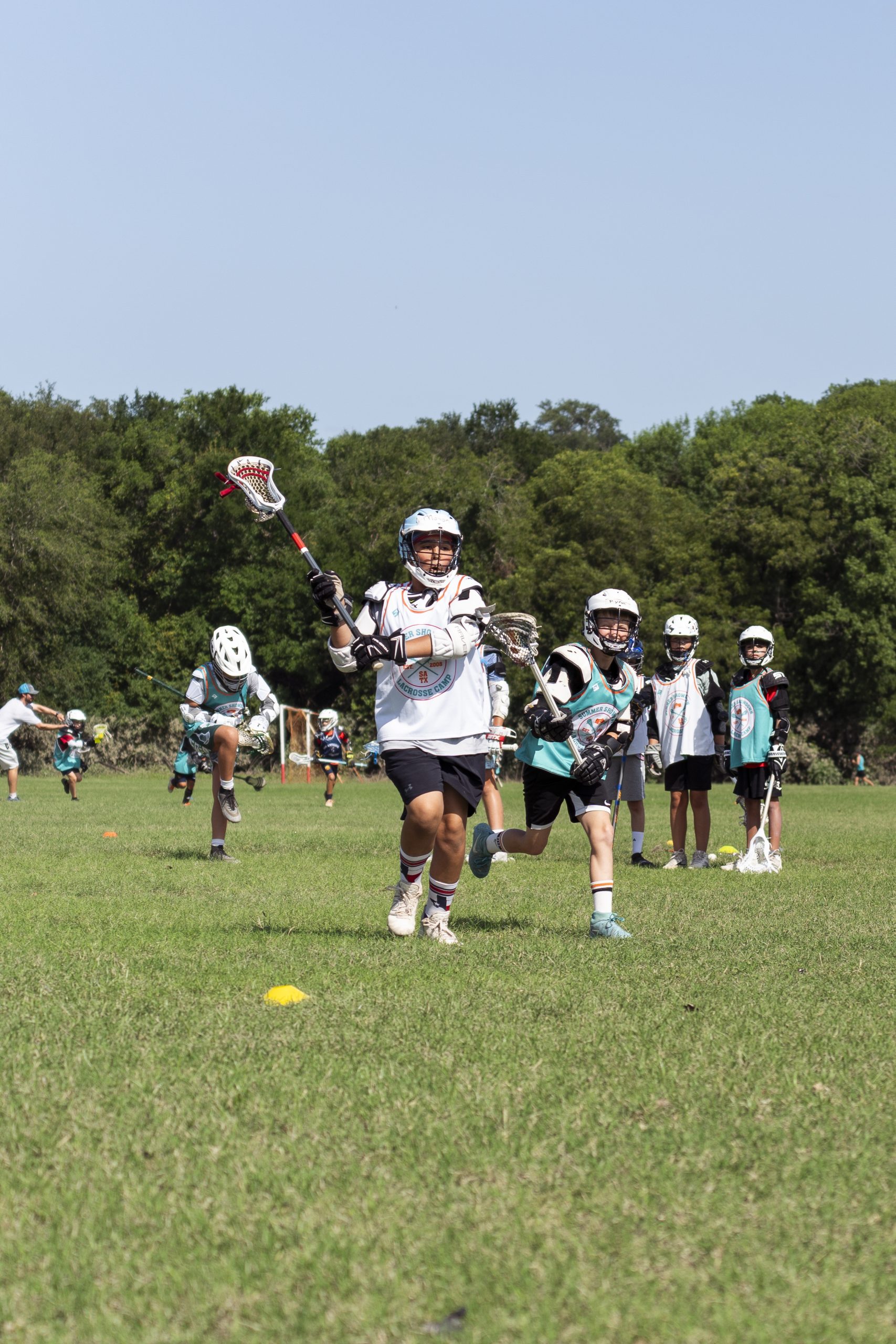
Every kid who picks up a stick is taking part in something older than the country they live in. Most of them will play an entire career without ever being told whose game it is.
This article is told with Haudenosaunee sources first and colonial sources second. That ordering is the whole point. Where the record is thin, I say so. Where the popular version of a story is wrong, I say that too — and several of the most repeated “facts” about lacrosse’s origins are wrong in ways that matter.
1. The game was a gift
Start with how the Onondaga Nation describes it on their own website, because they are the source and everyone else is a secondhand account:
The game was given by the Creator, to be played for the Creator. Source: Onondaga Nation.
That is not a metaphor and it is not in the past tense. It is still played that way, right now, a few hundred miles from where the NCAA championship is held.
2. Who the Haudenosaunee are
“Haudenosaunee” means People of the Longhouse. Six Nations: Mohawk, Oneida, Onondaga, Cayuga, Seneca, and Tuscarora, who joined the Confederacy around 1722.
You will more often see the word “Iroquois.” That is a French-derived name applied from outside, and the national team dropped it in June 2022 in favor of Haudenosaunee. This article uses the name they use. Source: Onondaga Nation and USA Lacrosse.
3. What it is called
The Onondaga name for the game is Dehontsigwa’ehs, which translates as “they bump hips.” Source: Onondaga Nation.
3.1 Two words almost every lacrosse site gets wrong
“Baggataway” is Ojibwe, from the verb baaga’adowe — “s/he plays lacrosse.” It is a real Anishinaabe word, confirmed in the University of Minnesota’s Ojibwe People’s Dictionary. Source: The Ojibwe People’s Dictionary.
“Little brother of war” is something else entirely. It translates the Choctaw term ishtaboli, and it was popularized in English as the title of Thomas Vennum’s Smithsonian book on the Southeastern game.
These are two different nations, two different languages, and two related but distinct traditional games. They are treated as synonyms on lacrosse websites constantly. They are not synonyms, and flattening them erases the difference between the Haudenosaunee game and the Choctaw one.
4. The Medicine Game
The game is played for healing — for a specific person, by request, when someone is sick. That is what “Medicine Game” means, and it is why it is not casual.
Traditionally it is played clan against clan, or young men against old men. Women do not play the traditional game. The Onondaga Nation explains that as respect for their role in providing life — that they are to protect the gift rather than play it. Source: Onondaga Nation. Reported in their words, not interpreted here.
5. The stick
One tree. One year. One pair of hands.
5.1 How a wooden stick is actually made
Shagbark or bitternut hickory, selected for tight grain. After the tree is cut, roughly two months of drying — then about ten more months of curing. Close to a full year before anyone begins carving and steam-bending it into shape.
5.2 Alf Jacques
The name to know is Alfred “Alf” Jacques of the Onondaga Nation.
He learned the craft at twelve from his father, Lou, and made sticks for more than fifty years — over 80,000 of them. In 1973 the two of them were producing roughly 12,000 wooden sticks a year. In 1974, after plastic heads went into mass production, they made about 1,200. One patent, one year, a ninety percent collapse.
He kept going anyway, for another five decades, and he taught younger carvers so the craft would not die with him.
In June 2023, weeks from the end of a long battle with kidney cancer, he received the fifteenth Spirit of the Tewaaraton Award. He died days later, at 74. Chief Oren Lyons on hearing of the honor: “Alfie Jacques is a national treasure of the Haudenosaunee. His tireless dedication to his life’s work has earned him the recognition and respect he justly deserves.” Source: Onondaga Nation and USA Lacrosse Magazine.
6. Fort Michilimackinac, June 2, 1763
This is the most famous story in lacrosse history, and it is told badly almost everywhere.
Here is what the record supports: on June 2, 1763, during Pontiac’s War, Ojibwe and Sauk players staged a game outside the walls of Fort Michilimackinac, and the fort was taken. The eyewitness account belongs to the trader Alexander Henry, published in 1809 and republished in annotated form by the fort’s own historical authority. Source: Mackinac State Historic Parks, and Henry’s narrative as edited by Dr. David Armour.
6.1 What this article will not tell you
You will find retellings with named tactical coordination, exact player counts, and dialogue. None of that is in Henry’s account. It has been added over two centuries of retelling, and it is left out here on purpose.
7. How it became the game we play
William George Beers, a Montreal dentist, founded the Montreal Lacrosse Club in 1856 and codified the rules of the modern game in 1867 — shorter games, fewer players, a redesigned stick, a rubber ball — and helped found the National Lacrosse Association the same year. Source: The Canadian Encyclopedia.
7.1 Canada’s national sport, corrected
You will read constantly that lacrosse was declared Canada’s national sport in 1859. That is wrong on both counts.
The National Sports of Canada Act of 1994 names lacrosse the national summer sport and ice hockey the national winter sport. Not 1859, and not lacrosse alone. Source: Justice Laws Website, Government of Canada.
8. And then they were barred from it
This section is short, and it is not softened.
In 1880 the National Lacrosse Association of Canada, reorganizing itself as an amateur body, classified Indigenous players as professionals — which excluded them from championship competition in the game they invented. An earlier rule in Beers’ own writing had already restricted Native players from joining clubs. Source: Smithsonian, National Museum of the American Indian Magazine.
Thirteen years after the game was written down, the people it came from were legislated out of it.
9. The Haudenosaunee Nationals
Founded in 1983 by Oren Lyons and Rick Hill. A full member of World Lacrosse since 1985.
They are the only Indigenous nation that competes internationally as a sovereign nation in any sport on earth. Not a regional team, not a demonstration side. A nation, with its own passport, on the field. Source: World Lacrosse.
9.1 2010 — the passports
Traveling to the world championship in Manchester, England, the team intended to use Haudenosaunee passports. The United States granted a one-time waiver. The United Kingdom would not issue visas. They would not travel on American passports instead, and the tournament moved on without them. They took forfeits in a world championship they had qualified for, rather than travel as citizens of a country they are not.
9.2 2022 — Ireland gave up its spot
Twelve years later, the Haudenosaunee qualified for the World Games in Birmingham, Alabama and were ruled ineligible because they have no National Olympic Committee.
Ireland Lacrosse, which had finished in the final qualifying position, voluntarily vacated its own spot so the Haudenosaunee could play. Ireland Lacrosse CEO Michael Kennedy: “The right thing for us to do as that final-placed team is to simply vacate our position, and create a pathway for the Iroquois to join that event. We owe the game of lacrosse to the Iroquois. They invented it.”
The Haudenosaunee men finished fifth. The women finished seventh. An Akwesasne woman designed a ribbon skirt to honor what Ireland had done. Source: Newstalk and Indian Time.
9.3 LA28 — where it actually stands
Lacrosse returns to the Olympics in 2028. As of the most recent documented status, March 25, 2026, the IOC has issued no decision on Haudenosaunee participation. The stated obstacle is the same one: no National Olympic Committee, which IOC rules require, plus concern about precedent.
Both the United States and Canada have formally asked for an exception — the U.S. in December 2023, and the two jointly on January 17, 2025.
If you see a headline saying the Haudenosaunee are competing in 2028, read it carefully. It is describing a government endorsement, not an IOC ruling. No ruling has been issued.
10. The players your kid already watches
Lyle Thompson — Onondaga on his mother’s side, Mohawk from Akwesasne on his father’s — shared the 2014 Tewaaraton Award with his brother Miles, then won it outright in 2015 as the first back-to-back winner in the award’s history. He has played for the NLL’s Georgia Swarm since being drafted first overall in 2015.
His brother Jeremy Thompson has spoken publicly, in his own words, about nearly losing himself to alcohol as a teenager and finding his way back: “I was able to finally break away in 2009, when I started reaching out through some healing ceremonies and talking with the elders.” Source: Indian Country Today.
10.1 One thing about the award’s name
Tewaaraton is the Mohawk name for the game itself. It is not a descriptive phrase, and it does not mean “little brother of war” — that phrase belongs to a different nation and a different tradition, as covered in section 3.1.
The dates on this page, in order
Every date below appears somewhere above, with its source attached there. Nothing has been added to this list that is not already on this page. If a term in it is unfamiliar, the glossary covers the vocabulary of the modern game.
| Date | What happened |
|---|---|
| c. 1722 | The Tuscarora join the Confederacy, making it Six Nations |
| June 2, 1763 | During Pontiac’s War, Ojibwe and Sauk players stage a game outside Fort Michilimackinac and the fort is taken |
| 1809 | Alexander Henry’s eyewitness narrative is published |
| 1856 | William George Beers founds the Montreal Lacrosse Club |
| 1867 | Beers codifies the rules of the modern game and helps found the National Lacrosse Association |
| 1880 | The National Lacrosse Association of Canada, reorganizing as an amateur body, classifies Indigenous players as professionals and excludes them from championship competition |
| 1973 | Alf and Lou Jacques produce roughly 12,000 wooden sticks in a year |
| 1974 | After plastic heads go into mass production, they make about 1,200 |
| 1983 | The Haudenosaunee Nationals are founded by Oren Lyons and Rick Hill |
| 1985 | The Nationals become a full member of World Lacrosse |
| 1994 | The National Sports of Canada Act names lacrosse the national summer sport and ice hockey the national winter sport |
| 2009 | Jeremy Thompson breaks away, through healing ceremonies and the elders |
| 2010 | The Nationals take forfeits at the world championship in Manchester rather than travel on passports that are not their nation’s |
| 2014 and 2015 | Lyle Thompson shares the Tewaaraton Award with his brother Miles, then wins it outright as the first back-to-back winner; he is drafted first overall in 2015 |
| June 2022 | The national team drops “Iroquois” in favor of Haudenosaunee |
| 2022, the World Games | Ireland Lacrosse vacates its World Games spot; the Haudenosaunee men finish fifth and the women seventh |
| June 2023 | Alf Jacques receives the fifteenth Spirit of the Tewaaraton Award and dies days later, at 74 |
| December 2023 | The United States formally asks the IOC for an exception for Haudenosaunee participation |
| January 17, 2025 | The United States and Canada ask jointly |
| March 25, 2026 | As of the most recent documented status, the IOC has issued no decision |
| 2028 | Lacrosse returns to the Olympics |
11. What to do with this
Nothing complicated. Watch The Medicine Game with your kid — it is a three-part documentary about the Thompson brothers, and it is already on our list of what to watch.
And know whose game this is. Your child inherited something. The sport is better when the people playing it know that.
Paul Taylor
Varsity Head Coach, Central Catholic High School
Founder, Great American Lacrosse
Paul Taylor is the varsity head lacrosse coach at Central Catholic High School in San Antonio and the founder of Great American Lacrosse, which runs the SA Armadillos club teams and the Summer Showdown Camp. He has coached lacrosse in San Antonio for over a decade.
Train with Great American Lacrosse
Great American Lacrosse runs year-round programs in San Antonio — the Speed & Skills Clinic, the SA Armadillos club teams, winter rec, private training, and the Summer Showdown Camp. Open enrollment, every level, beginners welcome.