

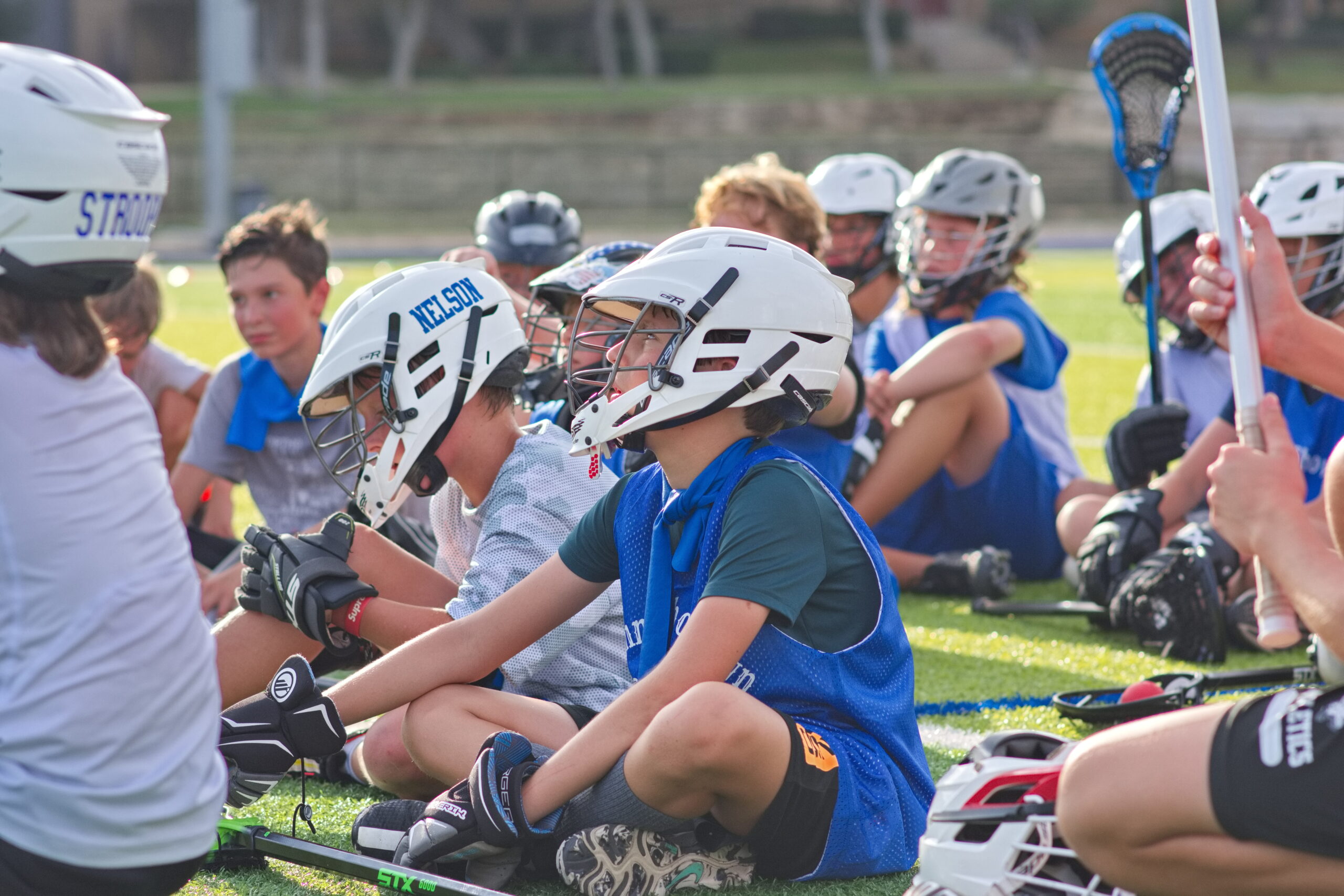
Your kid just picked up a stick and joined something about a thousand years old. Here is the whole story, from the first game ever played to the trophies sitting on shelves right now.
Lacrosse is the oldest organized sport on this continent and one of the fastest-growing ones, which is an unusual combination. A parent who understands how it got from there to here watches the game differently — and so does the kid who gets told about it on the drive home.
The milestones, in order.
The game was a gift before it was a sport
Lacrosse is Indigenous. It was played across North America by at least the 12th century, and among the Haudenosaunee — the Six Nations Confederacy of the Mohawk, Oneida, Onondaga, Cayuga, Seneca and Tuscarora — it is the Creator’s Game: given by the Creator, played for the Creator, and used as medicine for a specific sick person by request. Source: Onondaga Nation.
The scale is difficult to picture from a modern sideline. World Lacrosse describes traditional games played on fields anywhere from 500 yards to several miles long, running across days, with hundreds of players a side. The painter George Catlin counted “six or seven hundred” Choctaw players in a single game he watched in 1834. Games settled disputes between nations, trained young men, and healed people. Source: World Lacrosse and the Smithsonian American Art Museum.
How it got the name “lacrosse”
French Jesuit missionaries working in the St. Lawrence Valley were the first Europeans to write the game down. Jean de Brébeuf recorded the Huron playing it in 1636, and the French name attaches to that period of contact. Source: World Lacrosse.
So the sport your child plays carries a French name for a Haudenosaunee and Anishinaabe game, applied by missionaries in the 1600s. Nobody involved chose it, and it stuck anyway.
This is the part of the history that deserves more than a paragraph, and we gave it its own article. The Medicine Game, the stick makers, the 1880 exclusion, and the Haudenosaunee Nationals today are all in The Creator’s Game. Everything below is what happened after.
Montreal, 1867 — the year it became a sport with a rulebook
William George Beers, a Montreal dentist, founded the Montreal Lacrosse Club in 1856 and codified the modern rules in 1867 — shorter games, fewer players, a redesigned stick, a rubber ball. Every lacrosse rulebook in the world descends from that document. Source: The Canadian Encyclopedia.
The correction almost every lacrosse page needs: lacrosse was not declared Canada’s national sport in 1859. The National Sports of Canada Act of 1994 names lacrosse the national summer sport and ice hockey the national winter sport. Source: Justice Laws Website, Government of Canada.
Thirteen years after codification, the Canadian governing body reorganized as an amateur association and classified Indigenous players as professionals, which shut them out of championship play in the game they invented. That is not a footnote and it is covered properly in the Creator’s Game article.
Why the sport concentrated on one strip of the East Coast
American college lacrosse starts in New York. The first intercollegiate game was played November 22, 1877, NYU against Manhattan. The first intercollegiate tournament followed in 1881, with Harvard beating Princeton 3–0. From there it spread down the rail line: New York, Philadelphia, and above all Baltimore.
Baltimore is the reason the map looks the way it does. Johns Hopkins built the deepest program in the sport there, and its own athletics department claims 44 national championships — of which only nine are NCAA titles, because the sport crowned champions for decades before the NCAA ran a tournament. Source: Johns Hopkins Athletics. Navy, an hour down the road in Annapolis, has 17 national championships and zero NCAA titles for the same reason.
Prep schools, Ivy League programs and a dense cluster of public high schools in Maryland and on Long Island fed each other for a century. The result is a sport that grew outward from about a 200-mile corridor — which is why a family in Texas is still, in 2026, doing something slightly early. More on the programs that built that corridor in the blue bloods article.
Two Olympics, then a very long silence
Lacrosse was a full medal sport at the 1904 St. Louis Games and the 1908 London Games. Canada won both. It appeared again as a demonstration event in 1928 and 1932 and then left the Olympic program entirely. It returns at LA28, 120 years after that last medal event, in a six-a-side format, with a women’s event for the first time in Olympic history.
That whole story — the 1904 bronze medal team, why the sport left, what Sixes actually is, and the LA28 dates — is in Lacrosse in the Olympics.
The women’s game started somewhere else entirely
This surprises almost every parent: the girls’ game and the boys’ game are not variations of each other. They were founded separately, on different continents, and never merged.
The women’s game began in 1890 at St Leonards School in St Andrews, Scotland. The headmistress, Louisa Lumsden, introduced it after watching a men’s match between the Kahnawake Mohawk and the Montreal Lacrosse Club. Because it entered a girls’ school independently of Beers’ codified game, it never adopted body contact and wrote its own rule set from scratch. Source: World Lacrosse.
Rosabelle Sinclair, one of Lumsden’s students at St Leonards, founded the first American women’s team at the Bryn Mawr School in Baltimore in 1926. She became the first woman inducted into the National Lacrosse Hall of Fame. That makes 2026 the hundredth anniversary of women’s lacrosse in the United States, two years before the sport’s first Olympic women’s medal.
This is why the two games still look nothing alike. Twelve players a side instead of ten. A draw instead of a faceoff. No body checking at any level. A shallower stick pocket. Goggles instead of a helmet. None of that is a watered-down version of anything — it is a separate sport with a separate 136-year history, and the rules follow from where it started.
1971 — college lacrosse gets a real national championship
For decades the national champion was voted on. That ended after 1970, when Cornell went 11–0 and finished ranked fifth. The first NCAA tournament followed in 1971: eight teams, and Cornell beat Maryland 12–6 in front of 5,458 people. Source: USA Lacrosse Magazine.
For comparison, the 2026 men’s final drew 24,061 at Scott Stadium in Charlottesville, and the 2026 women’s final averaged 470,000 viewers on ESPN — the most-watched women’s lacrosse game on record. Source: USA Lacrosse Magazine and Front Office Sports.
The champions
Here is every recent NCAA Division I title, men’s and women’s, side by side. There was no 2020 tournament.
| Year | Men’s D1 champion | Women’s D1 champion |
|---|---|---|
| 2026 | Princeton | Northwestern |
| 2025 | Cornell | North Carolina |
| 2024 | Notre Dame | Boston College |
| 2023 | Notre Dame | Northwestern |
| 2022 | Maryland | North Carolina |
| 2021 | Virginia | Boston College |
| 2019 | Virginia | Maryland |
| 2018 | Yale | James Madison |
| 2017 | Maryland | Maryland |
| 2016 | North Carolina | North Carolina |
| 2015 | Denver | Maryland |
Sources: NCAA.com and NCAA.com women’s championship.
Men’s Division I, all time
Princeton’s 2026 win over Notre Dame, 16–9, was its seventh national title and its first since 2001. Denver’s 2015 title remains the only one won by a school west of the Eastern time zone.
| Program | NCAA titles | Years |
|---|---|---|
| Syracuse | 10 | 1983, 1988, 1989, 1993, 1995, 2000, 2002, 2004, 2008, 2009 (an eleventh, 1990, was vacated) |
| Johns Hopkins | 9 | 1974, 1978, 1979, 1980, 1984, 1985, 1987, 2005, 2007 |
| Princeton | 7 | 1992, 1994, 1996, 1997, 1998, 2001, 2026 |
| Virginia | 7 | 1972, 1999, 2003, 2006, 2011, 2019, 2021 |
| North Carolina | 5 | 1981, 1982, 1986, 1991, 2016 |
| Cornell | 4 | 1971, 1976, 1977, 2025 |
| Maryland | 4 | 1973, 1975, 2017, 2022 |
| Duke | 3 | 2010, 2013, 2014 |
| Notre Dame | 2 | 2023, 2024 |
| Loyola Maryland, Denver, Yale | 1 each | 2012, 2015, 2018 |
Sources: Johns Hopkins Athletics, UNC, Maryland Athletics, University of Virginia.
Women’s Division I, all time
Northwestern’s 2026 win over North Carolina, 14–11, was its ninth title. Maryland’s fourteen is the largest total in either game.
| Program | NCAA titles |
|---|---|
| Maryland | 14 |
| Northwestern | 9 |
| North Carolina | 4 |
| Virginia | 3 |
| Princeton | 3 |
| Boston College, Penn State, Temple | 2 each |
Source: NCAA.com.
The world championships
The first men’s World Championship was played in 1967 with four teams. World Lacrosse now has 97 member nations. Source: World Lacrosse.
| Men | Women | |
|---|---|---|
| First played | 1967, four nations | 1982 |
| Tournaments held | 14 | 12 |
| United States titles | 11 | 10 |
| Most recent | 2023, San Diego — USA over Canada, with the Haudenosaunee Nationals third | 2026, Tokyo — USA 16, Canada 4 |
| Notable | No nation other than the USA or Canada has ever won it | The 2026 gold was a fifth straight, run out to 36 consecutive wins since 2009 |
Sources: World Lacrosse and USA Lacrosse.
The professional era
Professional lacrosse comes in two flavors and they do not compete with each other on the calendar.
Indoor came first. The National Lacrosse League was founded in 1986 as the Eagle Pro Box Lacrosse League and is the oldest professional lacrosse league in North America. It plays box lacrosse — five runners and a goalie in a hockey rink, with boards, a 30-second shot clock and legal cross-checking. It runs winter into spring. Roughly 83 percent of its players are Canadian.
Outdoor arrived in 2001 with Major League Lacrosse. MLL survived twenty seasons on very little money — Paul Rabil has said on the record that pay ran “$8,000 to $10,000” for the league’s entire existence. Source: Entrepreneur.
The Premier Lacrosse League was announced October 22, 2018 and played its first season in 2019. By announcement day 140 players had signed with it, including 86 All-Americans and 10 Tewaaraton winners. MLL ceased to exist on December 16, 2020, absorbed into the PLL. One outdoor league since.
What that consolidation bought, in six years: ESPN signed a five-year rights deal in June 2025 and took an equity stake in the league. On June 30, 2026 the PLL closed a $100 million Series E — the largest raise in the history of professional lacrosse — led by Ares and Joe Tsai, with stated uses including youth access and affordability. Source: ESPN Press Room and PR Newswire.
A women’s professional league followed. The Women’s Lacrosse League launched in 2025, plays the sixes format, and sits under the same ESPN agreement.
Who holds every trophy right now
| Title | Current holder | Won |
|---|---|---|
| NCAA Division I men | Princeton | May 25, 2026 — 16–9 over Notre Dame |
| NCAA Division I women | Northwestern | May 2026 — 14–11 over North Carolina |
| PLL (outdoor pro) | New York Atlas | September 14, 2025 — 14–13 over the Denver Outlaws |
| NLL (indoor pro) | Toronto Rock | May 18, 2026 — swept Halifax 2–0; seventh NLL title, first since 2011 |
| World Lacrosse women | United States | August 2, 2026, Tokyo — 16–4 over Canada |
| World Lacrosse men | United States | July 1, 2023, San Diego — over Canada |
Sources: NCAA.com, 2025 PLL season, In Lacrosse We Trust, World Lacrosse.
How the sport left the corridor
The geographic story of the last twenty-five years is lacrosse leaving Baltimore and Long Island. Denver winning a national title in 2015 was the visible marker; the quieter one is that the states adding players fastest are now California, North Carolina, Texas, Georgia and Florida. Source: Crease Report.
Texas is a real example of what that looks like on the ground. The state had no scholastic lacrosse at all until St. John’s School in Houston founded a team in 1987. The Texas High School Lacrosse League was founded in 1989 and now runs about 90 programs, 157 teams and 3,289 athletes, and Texas ranks 11th nationally among states producing Division I men’s players. Source: THSLL. How that reached this city specifically is its own article.
Lacrosse today, by the numbers
| Measure | Figure |
|---|---|
| USA Lacrosse membership | More than 425,000 (2026) |
| High school participants, boys and girls | 216,205 (2024) — girls lacrosse ranks 10th among girls sports, boys 11th |
| Girls high school participants | 99,292 (2024–25) |
| Players ages 6–12 | About 168,000 (2023), down 18% in one year |
| Players ages 13–17 | Nearly 360,000 (2023) |
| NCAA Division I women’s programs | 77 in 2006, 127 in 2026 |
| World Lacrosse member nations | 97 |
Sources: USOPC, D3 Lacrosse, Front Office Sports, World Lacrosse.
An honest reading of those numbers. The college, professional and international sides of this sport are growing quickly and are better funded than they have ever been. The youngest age band is the one that has not recovered from 2020 and 2021. What that means for a family is straightforward: there is more opportunity waiting at the top of the pipeline than there are kids currently entering the bottom of it.
What to do with all of this
Tell your kid some of it. The stick in the garage descends from a hickory branch that took a year to cure, and that story is worth a night on the couch. The people who invented this game still play it, still make the sticks, and still field a national team. The players your child is about to watch on ESPN are in the figures article.
And the timing is genuinely good. A third grader holding a stick this fall is a high school sophomore when lacrosse comes back to the Olympics in Los Angeles. That has not been true for any generation of American kids before this one.
Paul Taylor
Varsity Head Coach, Central Catholic High School
Founder, Great American Lacrosse
Paul Taylor is the varsity head lacrosse coach at Central Catholic High School in San Antonio and the founder of Great American Lacrosse, which runs the SA Armadillos club teams and the Summer Showdown Camp. He has coached lacrosse in San Antonio for over a decade.
Train with Great American Lacrosse
Great American Lacrosse runs year-round programs in San Antonio — the Speed & Skills Clinic, the SA Armadillos club teams, winter rec, private training, and the Summer Showdown Camp. Open enrollment, every level, beginners welcome.