
Youth Lacrosse for Beginners in San Antonio
Written for the San Antonio parent who has never watched a single lacrosse game. No jargon, no assumptions, and in the order that actually makes sense.
What is lacrosse?
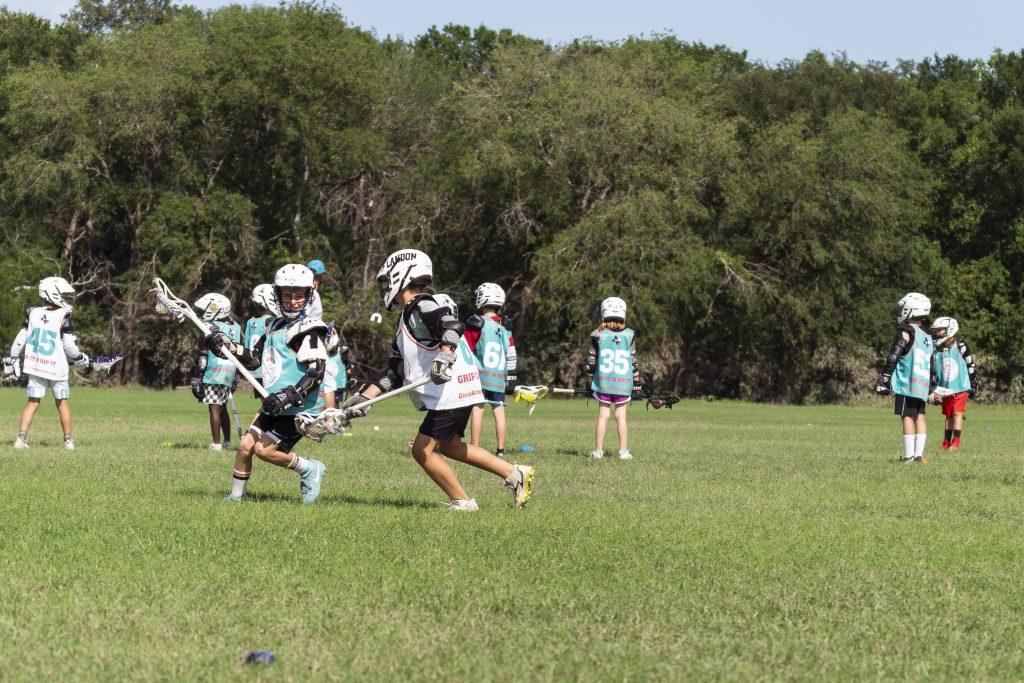
Lacrosse is a team sport played with a stick that has a small net on the end. Players use that stick to catch, carry and throw a solid rubber ball, and they score by putting it in the other team’s goal.
That is the whole idea. Nobody handles the ball with their hands except the goalkeeper — everything else happens through the stick. One point per goal, highest score wins.
You will hear it called “the fastest game on two feet.” If you follow other sports, this is the quickest way to picture it:
Runs like soccer
An open field, continuous play, two goals, and a goalkeeper defending each one.
Passes like basketball
Quick give-and-go passing, off-ball movement, and set plays run around the goal.
Substitutes like hockey
Players change on the fly through a substitution box while play continues.
Every site a lacrosse parent actually needs
Bookmark this section. These are the primary sources — the people who write the rules, set the equipment standards, and run the leagues your child will play in — plus the handful of shops and channels worth your time. Each link goes straight to the organization itself.
1 · The rules and the rule books
Youth lacrosse rules change by age group, and boys’ and girls’ rules are genuinely different games. USA Lacrosse writes the youth rule books; the NFHS book governs high school. If a coach or official tells you something and you want to check it, it is in one of these.
- USA Lacrosse — Rules hubStart here. Every rule book and rule change for every level.
- Boys’ & Men’s Rules
- Girls’ & Women’s Rules
- 2026 Boys’ Youth Rule Book (PDF)
- 2026 Girls’ Youth Rules Comparison (PDF)The clearest single page on what changes from 8U to 14U.
- NFHS High School Rule Book — access guide (PDF)
- Box lacrosse rulesThe indoor game. Different field, different stick skills.
- Sixes rules — the Olympic format (PDF)The version of lacrosse being played at Los Angeles 2028.
- Field diagramsWhat all those lines and circles mean.
2 · Learn the game by watching
Twenty minutes of video will teach you more about lacrosse than an hour of reading. Watch the two rules explainers before your child’s first game and you will follow the whole thing — including why the whistle keeps stopping play near the crease.
- The Rules of Field Lacrosse — ExplainedThe boys’ game in one sitting.
- The Rules of Women’s LacrosseWatch this one if your daughter is playing — the two games are not the same.
- Lacrosse 101 for Parents
- Great American Lacrosse on YouTubeCoach Paul’s own playlists, built for the players in this program.
3 · Gear — what to buy and where
Do not buy a full kit before your child has played. Start with the USA Lacrosse equipment page — it is the standard every league enforces, and it is the difference between a helmet that passes inspection and one that does not. Then buy used. A starter stick and gloves off SidelineSwap cost a fraction of retail, and your child will outgrow them anyway.
- USA Lacrosse — official equipment requirementsThe list that actually governs what your child can wear on the field.
- USA Lacrosse Equipment CouncilThe body that sets and updates the safety standards.
- SidelineSwapUsed gear. The cheapest honest way to start.
- Lacrosse Unlimited
- Lax.com
- Lacrosse Monkey
- Universal Lacrosse
- Sports Stop
- Dick’s Sporting Goods — lacrosse
- SISU mouthguardsThin, moldable, and kids will actually keep them in.
- Swax LaxSoft weighted balls. The one purchase that makes backyard practice possible without breaking a window.
Stick and pad brands: STX · Warrior · Maverik · East Coast Dyes · Epoch · Powell Lacrosse
4 · The stick — stringing and pockets
A stick is not finished when you buy it. The pocket — the mesh and the strings that hold the ball — is adjusted, breaks in, and eventually needs restringing. Learning to tighten a shooting string yourself will save you a trip to the shop mid-season, and a pocket that is too deep is illegal at every level.
- StringKingMesh, complete sticks, and clear stringing guides.
- Stylin Strings
- Stylin Strings on YouTubeStep-by-step stringing, filmed close up.
- JimalaxCheap mesh and strings by the pack.
- Jimalax on YouTube
- Traditional LacrosseHand-made wooden sticks, still made the original way.
5 · History and origins
Lacrosse is not a prep-school invention. It is the oldest team sport in North America, created by the Haudenosaunee and understood as a gift from the Creator — the medicine game. Your child should know that before they know how to cradle.
- World Lacrosse — origin and history of the game
- Smithsonian NMAI — “The Creator’s Game”The best short read on where the sport comes from.
- The Medicine GameThe Thompson brothers, Onondaga Nation to Division I.
- Roots of Lacrosse
- The Lost Trophy
- NLL — Box Lacrosse 101How the indoor game grew out of the original one.
6 · News and following the sport
Once your child is hooked, this is where the season lives — rankings, rule changes, and the college game. USA Lacrosse Magazine comes with a USA Lacrosse membership, which your child will need anyway to play in a sanctioned league.
- USA Lacrosse Magazine
- Inside LacrosseThe paper of record for recruiting and the college game.
- Lacrosse All Stars
- NCAA Men’s Lacrosse
- USA Lacrosse membershipRequired for sanctioned play, and it carries the insurance.
7 · Playing here — San Antonio and Texas
These are the organizations that actually run games in our area. STXYLA runs the local youth spring season; THSLL and TGHSLL run high school boys’ and girls’ lacrosse across Texas.
- STXYLA — South Texas Youth Lacrosse AssociationThe local youth league. Spring season.
- THSLL — Texas High School Lacrosse League (boys)
- TGHSLL — Texas Girls High School Lacrosse League
8 · Pro and international
Watching real lacrosse is the fastest way for a new player to understand spacing and stick protection — and it is genuinely fun to watch. The PLL plays outdoors in summer on ESPN; the NLL plays the indoor game in winter. Lacrosse is also back in the Olympics at Los Angeles 2028, in the Sixes format.
- Premier Lacrosse LeagueThe top outdoor pro league in the world.
- PLL live games on ESPN
- PLL on YouTubeFree full-game replays and highlights.
- National Lacrosse League — watch live
- NLL on YouTube
- World LacrosseThe international governing body. Olympic news lives here.
- USA Lacrosse National Teams
Playing already? This section is written for parents. Players looking for film, drills, classic games and the college path should go to Player Resources, which is built for them.
The oldest team sport in North America
Lacrosse was not invented by a school or a league. It was created by Indigenous nations, and it is still played today as a cultural and spiritual practice, not only as a sport.
The Creator’s Game
The game originates with the Haudenosaunee Confederacy — the Mohawk, Oneida, Onondaga, Cayuga, Seneca and Tuscarora nations. It is understood as a gift from the Creator, and is also called the medicine game.
Tewaaraton
That is the Mohawk name for the game. Traditionally it was played to settle disputes without violence, to heal, and to honor. Traditional sticks are still gifted to children at birth.
Back in the Olympics
Lacrosse returns to the Olympic Games at Los Angeles 2028 — its first appearance as a medal sport since the 1908 Games in London. The Olympic format is Sixes, a faster, smaller-sided version.
Sources: Smithsonian NMAI · USA Lacrosse
Five minutes of video beats five pages of text
Before you read any further, sit down with your child and watch a little of the real thing. It will make everything below click.
Premier Lacrosse League
The top professional men’s league in the United States. Their highlight reels and explainer clips are short, free, and genuinely good at showing what the game looks like at full speed.
USA Lacrosse
The national governing body for the sport in the United States. They publish the youth rule books, equipment standards, coaching certification and beginner explainers referenced throughout this page.
The stick is the sport
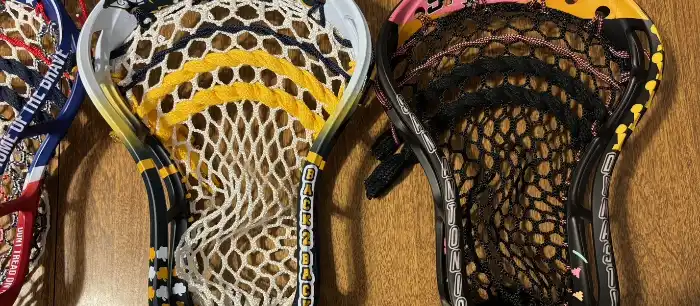
Everything in lacrosse runs through the stick, so it is worth two minutes of your time. It has three parts, and once you know them the rest of the game reads much more easily.
The head
The plastic frame at the top with mesh strung inside it. This is what catches, carries and throws the ball. Goalkeepers use a much wider head.
The shaft
The metal or composite handle. Attackers and midfielders use a short shaft. Defenders use a long pole, roughly six feet, which is why they look so different on the field.
The pocket
The depth of the sag in the mesh, where the ball actually rides. A well-strung pocket is the difference between a player who can catch and one who cannot.
The word you will hear most at your first game is “cradle.” That is the rhythmic rocking motion players make with the stick to keep the ball seated in the pocket while they run. It looks odd the first time you see it. It is also the single most important skill a beginner learns, and it is the first thing we teach.
Who is who on the field
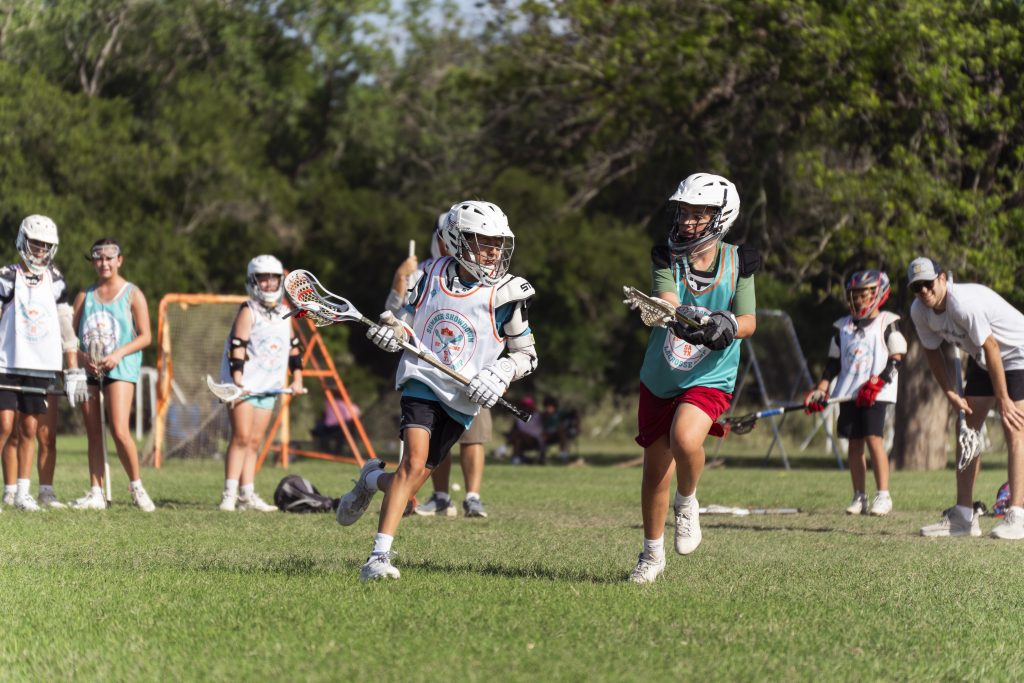
At full size, a boys’ team plays ten players including the goalkeeper; a girls’ team plays twelve. There are four jobs, and there is a real place here for every kind of athlete.
Attack
Lives on the offensive half and finishes plays. Usually the quickest and most creative players with the best stick skills.
Midfield
Covers the entire field and plays both ends. The endurance position, and the one that touches the ball most often.
Defense
Protects the goal, usually with the long pole. An excellent fit for bigger, physical, patient kids who read the game well.
Goalkeeper
Stops shots with an oversized head, directs the defense, and is the only player permitted to touch the ball with a hand.
How a game actually works
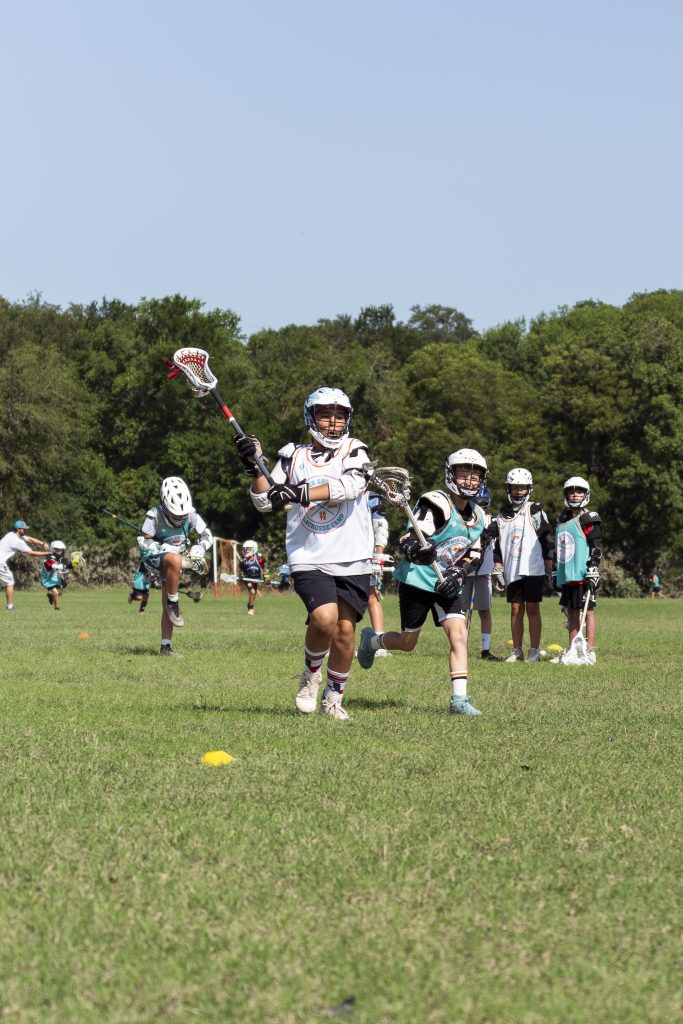
You do not need the rule book to be a good lacrosse parent. Six things will carry you through your first game.
- Play starts with a face-off. In the boys’ game two players crouch over the ball at midfield and fight for possession on the whistle. This repeats after every goal. The girls’ game uses a draw, where the ball is pressed between two sticks and lifted into the air.
- The ball moves by running or passing. Carry it in the stick or throw it to a teammate. No hands on the ball except the goalkeeper.
- A goal is worth one point. Shots are taken from anywhere on the offensive half, and they come fast.
- There is a circle around each goal called the crease. Only the goalkeeper may stand inside it. An attacker who steps in wipes out the goal.
- Penalties put a player in a box and off the field. Typically thirty seconds to a minute, and their team plays short until it expires. You will hear this called being “man up” and “man down.”
- Games run in quarters on a running clock at the youth level. Younger age groups play smaller-sided games on a shorter field so that every child takes far more touches on the ball.
Boys’ and girls’ lacrosse are two different sports
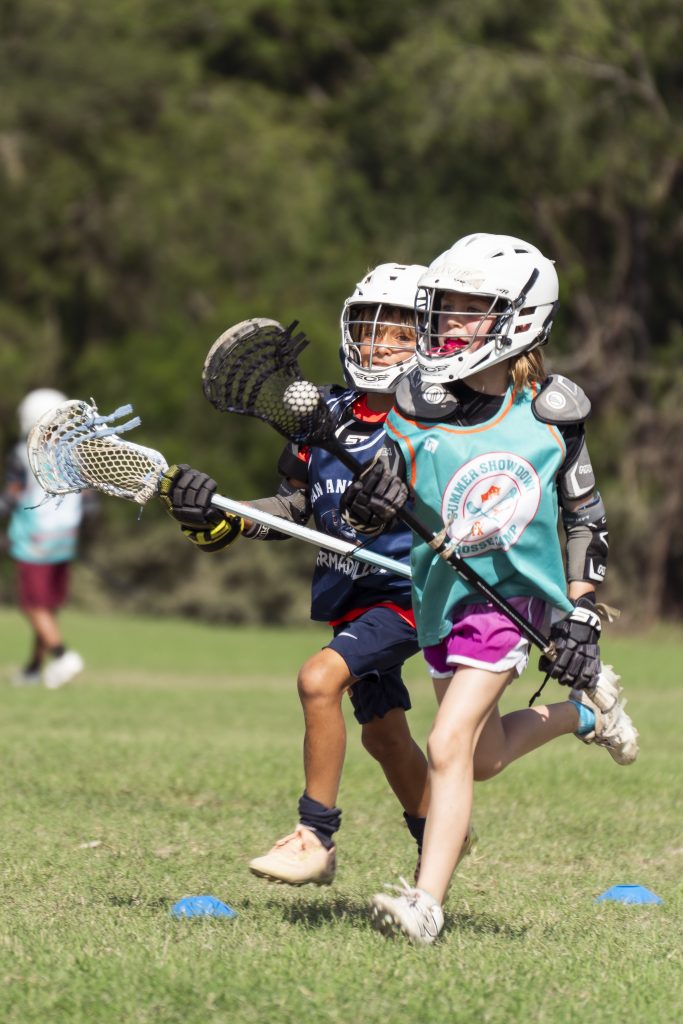
This catches nearly every new family off guard. Same ball, same goal, same objective — but different rules, different sticks, different equipment, and a different feel on the field.
Boys’ lacrosse
- Body contact is part of the game. Legal body checks and stick checks are permitted, and they are phased in by age rather than allowed all at once.
- Ten players on the field at full size, including the goalkeeper.
- Full protective equipment is required.
- Possession restarts with a face-off.
Girls’ lacrosse
- It is a non-contact game. The rules are written specifically to keep bodies and sticks away from each other, and checking is introduced gradually with age.
- Twelve players on the field at full size, including the goalkeeper.
- Far less equipment is required.
- Possession restarts with a draw at the center.
Because the girls’ game requires so much less equipment, it is usually the simpler and less expensive place for a brand new family to start.
What your child is actually required to wear
This is not a matter of opinion. USA Lacrosse sets the equipment requirements, and certified gear carries a standard printed right on it. Here is the honest list.
Required for a boy
- Helmet — must be NOCSAE certified
- Chest protector — must meet the NOCSAE ND200 standard, required for field players since 2022
- Shoulder pads and arm pads
- Gloves
- Mouthguard
- Stick and cleats — soccer or football cleats are fine
- Rib pads are optional
Required for a girl
- Protective eyewear — must meet the current ASTM standard
- Mouthguard
- Stick — girls’ sticks are strung differently, so buy a girls’ stick, not a boys’ one
- Cleats — soccer or football cleats are fine
- Headgear is optional, and if worn it must meet the ASTM F3137 standard
- Gloves are optional
Goalkeepers, boys and girls both, wear a helmet with a face mask, a separate throat protector, padded gloves and a chest protector meeting NOCSAE ND200.
Do not buy any of it until your child has held a stick. We keep starter equipment on hand to lend, and our free community clinic each February exists precisely so a family can try the sport before spending a dollar. Try first, then buy.
What the game looks like at your child’s age
Youth lacrosse is deliberately built as a ladder. Contact, field size and team size are all phased in as players grow older, which is why an eight-year-old’s game looks nothing like a fourteen-year-old’s.
Boys
| Age group | On the field | Field | Game length | Contact |
|---|---|---|---|---|
| 6U & 8U | 4v4, including a goalkeeper | Cross field, roughly 60–70 yards long | Two 12-minute halves, running clock | No body checking. Only lift, poke and downward stick checks below the shoulders. |
| 10U | 6v6 or 7v7 with a goalkeeper | Three-quarter field | Four 10-minute quarters, running clock | No body checking. Same limited stick checks as 8U. |
| 12U | 10 players — 1 goalkeeper, 3 defense, 3 midfield, 3 attack | Full field | Four 10-minute quarters | Body checking permitted with restrictions. Stick checking legal. |
| 14U | 10 players, same structure | Full field | Four 10-minute quarters | Body checking legal, no take-out checks. Full stick checking. |
Girls
| Age group | On the field | Field | Game length | Checking |
|---|---|---|---|---|
| 6U & 8U | 3v3 up to 7v7, goalkeeper optional | Cross field | 6 to 8-minute quarters, running clock | No checking at all. Soft balls required. |
| 10U | 3v3 up to 8v8 with a goalkeeper | Cross field | Up to 10-minute quarters, running clock | No checking. Smaller sticks with modified pockets are permitted. |
| 12U | Full high-school structure | Full field | 10-minute quarters, running clock | Modified checking introduced. |
| 14U | Full high-school structure | Full field | 12-minute quarters, running clock | Transitional checking permitted. |
Source: USA Lacrosse 2026 Boys Youth Rules and 2026 Girls Youth Rules. Local leagues may adopt modifications.
Words you will hear at your first game
Learn these eight and you will follow the whole game from the sideline.
Lacrosse in San Antonio, and who runs what
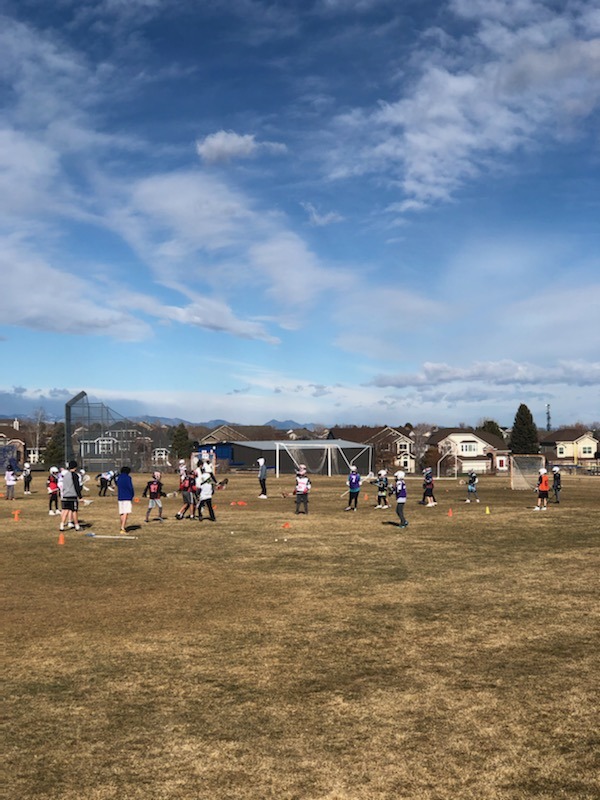
The game is growing quickly here. These are the four organizations every new family in this city will eventually run into.
STXYLA — the youth league
The South Texas Youth Lacrosse Association runs organized youth boys’ and girls’ league play across the San Antonio and South Texas area. If your player plays a spring season here, STXYLA is who runs it.
High school lacrosse
High school boys compete in the Texas High School Lacrosse League and high school girls in the Texas Girls High School Lacrosse League. San Antonio schools play in both, and both run a state tournament.
USA Lacrosse membership
The national governing body. Most leagues, camps and tournaments require an active USA Lacrosse membership for each player, which also carries accident insurance. You will be asked for it eventually, so it is worth setting up early.
Great American Lacrosse
That is us. Family-run, locally owned, and the home of the longest running summer lacrosse camp in San Antonio. We are the best place in this city for a brand new player to take a first swing at the sport. Everything we run is listed below.
Where to start with us
Every one of these is built to take a complete beginner. Pick whichever fits your family right now.
Still have questions?
Nobody expects a new family to know any of this yet. Coach Paul is a USA Lacrosse Certified Platinum Level Coach for both boys and girls, and he is happy to walk you through what to buy, what to skip, and where your child fits.